I should mention, while all these cameras I have connected via POE, they are all also available via wifi, so no need to be scared away due to the POE talk.
In the world of home security, you often face a choice: the easy, subscription-heavy path of consumer tech giants like Google Nest, or the more robust, quality-driven route. For savvy homeowners and small businesses, the latter often leads to Reolink Power over Ethernet (PoE) cameras.
Reolink's PoE systems offer a compelling alternative that prioritizes high-end video quality, unmatched reliability, and the freedom of open standards—a stark contrast to the closed ecosystems of their competitors.
Reolink vs. Google Nest Quality
While Google Nest cameras are known for their user-friendly design, they often fall short in raw video performance compared to Reolink's dedicated PoE lineup, especially when you factor in subscriptions.
| Feature | Reolink PoE (Top Models) | Google Nest Cam (Battery/Wired) | Key Advantage |
| Max Resolution | Up to 16MP (Duo 3 PoE), commonly 4K (8MP) | Generally 1080p or 2K | Reolink's superior resolution |
| Power/Connection | Power over Ethernet (PoE) | Wi-Fi (Battery or Wired Plug) | PoE reliability and stability |
| Local Storage | NVR or onboard microSD card (No fee) | 3 hours of event history free; full history requires Nest Aware subscription | No mandatory subscription |
| Advanced Night Vision | ColorX, Spotlight, Infrared, often with larger sensors | Color Night Vision (requires ambient light or spotlight) | Dedicated low-light sensors (e.g., ColorX) |
| Zoom Capability | Often includes Optical Zoom (e.g., 5x) on certain models | Digital Zoom only | Optical zoom retains clarity |
Reolink's dedication to higher resolution (up to 4K and even 16MP on their newest dual-lens models) gives you the critical detail you need, especially when trying to identify a face or license plate at a distance. Coupled with the rock-solid stability of a PoE connection (a single Ethernet cable for both power and data), Reolink systems are built for 24/7, uninterrupted performance that Wi-Fi cameras simply can't match.
The Power of PoE: A Stable Foundation
The very core of a Reolink system is Power over Ethernet (PoE). This is not just a different way to plug in; it's a fundamental shift in reliability and installation simplicity.
- One Cable, Two Jobs: PoE uses a single Ethernet cable to transmit both electrical power and data. This means fewer cables, simpler runs, and no need to install a power outlet near every camera.
- Uninterrupted Reliability: Unlike Wi-Fi cameras, which can suffer from signal interference or dropped connections, PoE provides a consistent, high-bandwidth wired link. This is essential for streaming high-resolution (4K and higher) video continuously to a Network Video Recorder (NVR).
- Centralized Power Backup: Your entire system can be backed up with a single Uninterruptible Power Supply (UPS) connected to your NVR, ensuring your cameras keep recording even during a power outage.
The Benefit of Open Standards
Perhaps the most significant long-term advantage of choosing a brand like Reolink is their commitment to open standards, most notably ONVIF (Open Network Video Interface Forum). Cameras from closed ecosystems like Nest are designed to work only with Google's hardware and cloud services. This leads to vendor lock-in, forcing you to pay subscription fees and restricting your future hardware choices.
Open standards, on the other hand, provide:
- Interoperability: An ONVIF-compliant Reolink camera can work seamlessly with a Network Video Recorder (NVR) or video management software (VMS) from any other ONVIF-compliant brand. This means you can mix-and-match devices to build a truly custom system.
- Future-Proofing: If you want to switch to a new NVR brand or VMS software in a few years, your existing cameras can likely be brought along. You are not forced into an expensive, site-wide "forklift upgrade" simply because one product line is discontinued.
- Local Control: Open standards often facilitate greater local control over your footage. Reolink embraces this by offering local storage via NVRs or microSD cards, completely bypassing the need for mandatory, recurring cloud subscription fees to view recorded video.
Switching to a Reolink PoE camera system is more than just an upgrade in resolution; it's an investment in a more robust, flexible, and cost-effective security infrastructure that gives you full control back over your property monitoring.
Here are the three types of ReoLink cameras that I use:
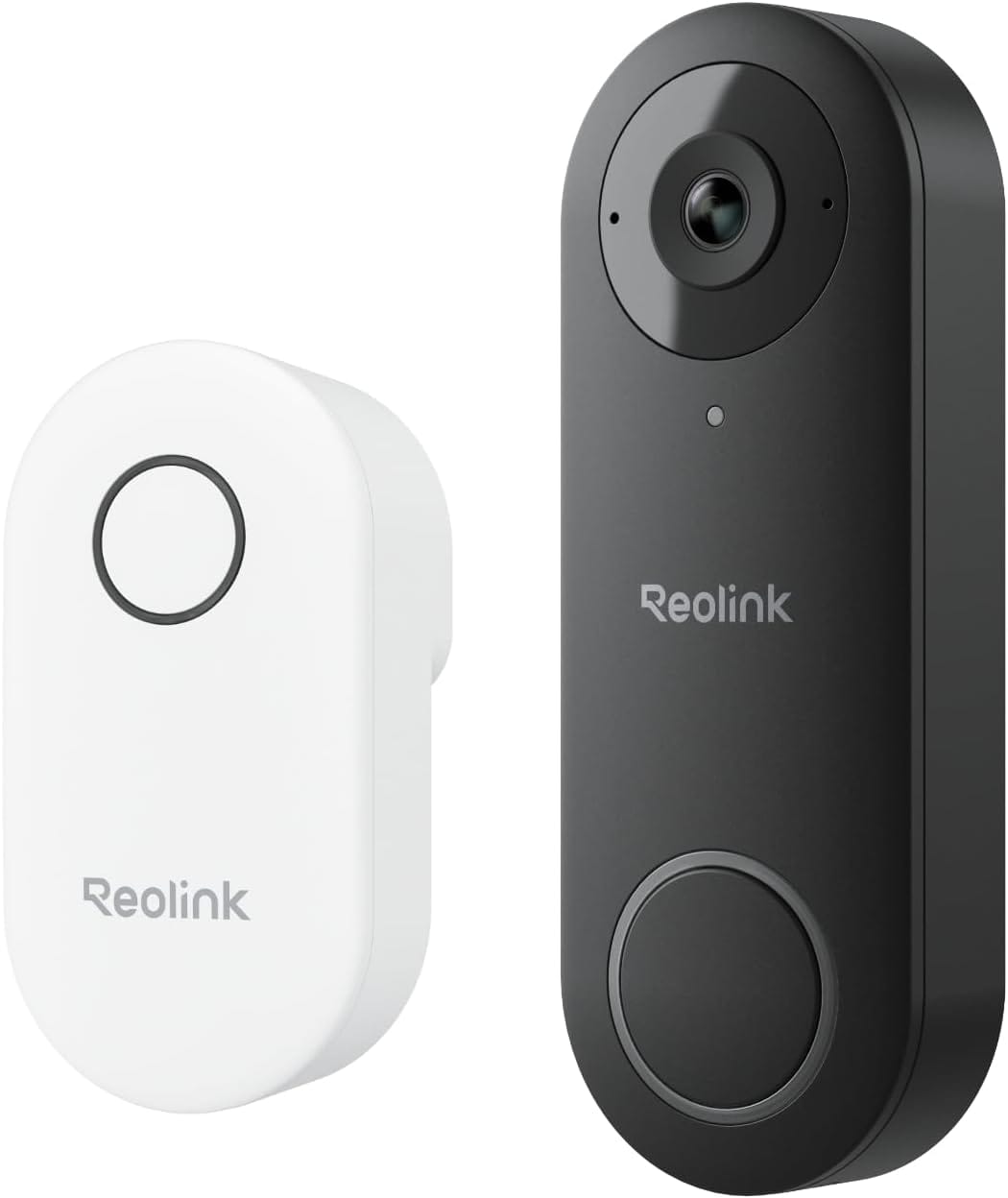
REOLINK Video Doorbell Camera WiFi, 2K Wired Doorbell Camera
Reolink Video Doorbell WiFi 5MP Security Camera is a wired smart video doorbell that provides 2K+/5MP HD video monitoring for your front door. It connects to 2.4 GHz or 5 GHz Wi-Fi and sends real-time alerts to your phone when it detects motion, people, or visitors.
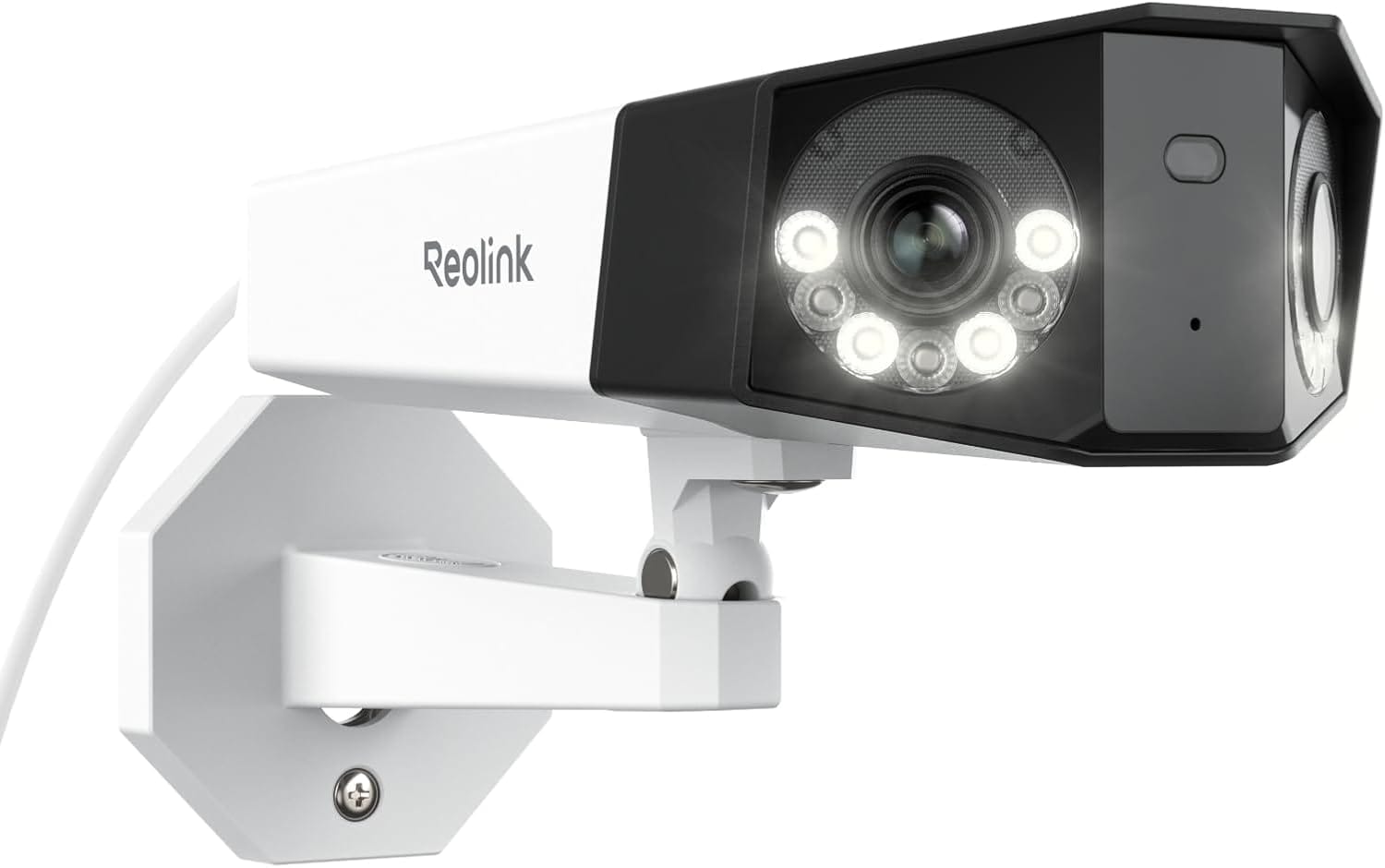
REOLINK Duo 2 PoE, 4K Dual-Lens PoE Security Camera with 180° Panoramic View
The Reolink Duo dual-lens security camera is an outdoor Wi-Fi camera that combines two lenses into one device to create a seamless 180° panoramic view, letting you monitor large areas like driveways or backyards with a single camera. It records in 4K/8MP ultra-HD, features person and vehicle detection, color night vision with spotlights, two-way audio, and motion alerts sent to your phone. It supports local microSD storage or NVR recording and is IP66 weatherproof, with no required monthly subscription.
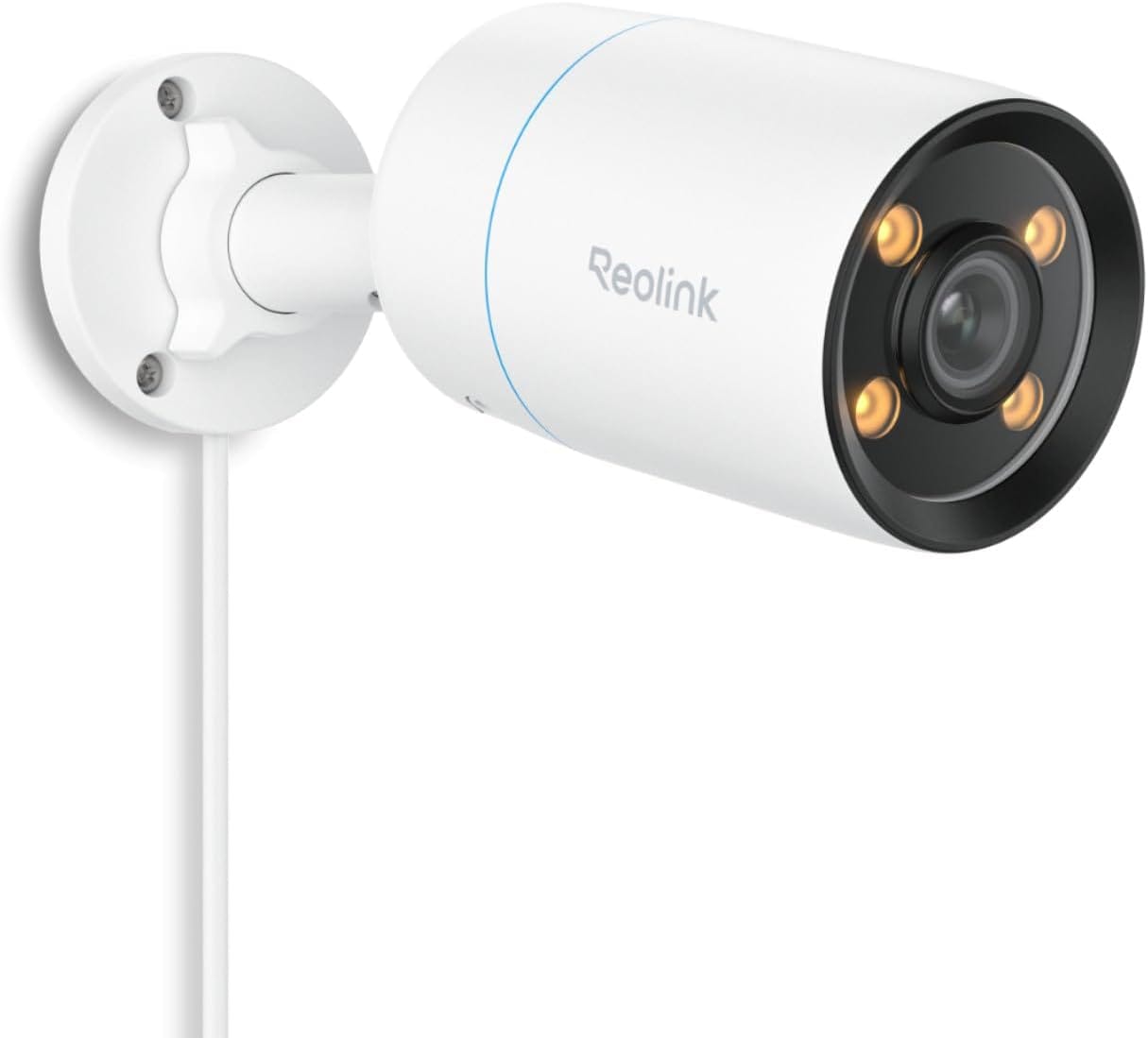
Reolink CX810 4K PoE Security Camera
Reolink CX810 4K 8MP PoE Security Camera is a high-resolution outdoor security camera that records in 4K Ultra HD and uses ColorX technology with an F1.0 large-aperture lens to deliver true full-color night vision even in very low light. It features smart detection for people, vehicles, and animals, two-way audio, a motion-activated spotlight and siren, and connects via Power-over-Ethernet (PoE) for reliable power and data through a single cable.
Overall I am very happy after a year of use of how the Reolink cameras have performed vs. my previous Google Nest camera's. Quality and performance is amazing.